Philippine Housing Market Outlook 2026: Why Buyers and Investors Have the Advantage
As the Philippine housing market enters 2026, a clear shift is taking place. Buyers have more choices, investors have better negotiating power, and developers are adjusting strategies to meet changing demand. This evolving landscape presents timely opportunities—especially for first-time buyers, property investors, Overseas Filipino Workers (OFWs), and expatriates. Philippine Housing Market Outlook 2026
1/12/20262 min read
As the Philippine housing market enters 2026, a clear shift is taking place. Buyers have more choices, investors have better negotiating power, and developers are adjusting strategies to meet changing demand. This evolving landscape presents timely opportunities—especially for first-time buyers, property investors, Overseas Filipino Workers (OFWs), and expatriates.
Below is a data-driven look at what’s happening, why it matters, and how buyers can move strategically in today’s market.
More Supply, More Choices
One of the defining features of the current housing market is increased inventory, particularly in ready-for-occupancy (RFO) units.
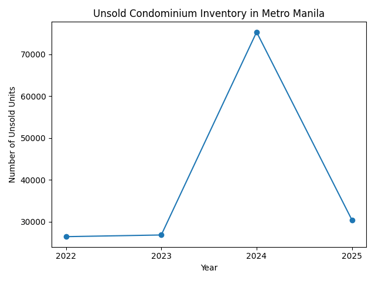
In Metro Manila alone, unsold condominium inventory rose sharply in recent years before easing slightly toward the end of 2025. While this signals challenges for developers, it creates a favorable environment for buyers.
What this means for buyers:
More options across locations and price points
Less urgency to “rush” into a purchase
Stronger position to negotiate price, terms, and inclusions
(See Figure 1: Unsold Condominium Inventory in Metro Manila)
Developers Are Offering Smarter Deals
To respond to slower absorption, developers are rolling out buyer-friendly incentives, including flexible downpayment schedules, extended payment terms, rent-to-own options, and move-in promotions for RFO units.
These strategies are particularly attractive to mid-income buyers, especially in an environment where mortgage rates remain elevated but stabilizing.
Housing Prices: Still Rising, But at a Slower Pace
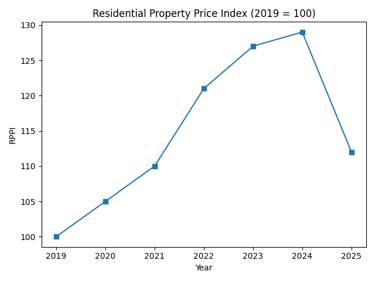
Data from the Residential Property Price Index (RPPI) indicate that while housing prices increased steadily from 2019 to 2024, growth moderated in 2025. This reflects a market undergoing rebalancing rather than contraction.
This slowdown provides buyers with a window to enter the market without the pressure of rapid price escalation.
(See Figure 2: Residential Property Price Index Trend)
Median Home Prices in 2025: Stability Over Speculation
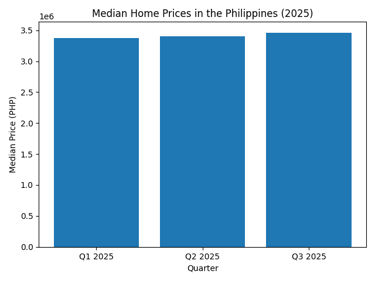
Median home prices in 2025 show gradual quarterly increases rather than sharp spikes. This trend supports a healthier market environment by reducing speculative risk and encouraging long-term planning.
(See Figure 3: Median Home Prices in the Philippines, 2025)
Why Timing Matters: Buyer Leverage Is High
When supply expands faster than demand, buyer leverage increases. According to real estate cycle theory, excess inventory typically leads to slower price growth and greater flexibility in transaction terms.
This environment allows buyers to negotiate more effectively and make decisions based on fundamentals rather than fear of missing out.
A Strategic Opportunity for OFWs and Expats
OFWs and expatriates remain a crucial segment of the Philippine housing market. Competitive pricing, developer incentives, and the availability of mid-priced housing units (₱2M–₱3M range) make 2026 an attractive entry point for those seeking residential or investment properties.
Foreign-earned income and longer investment horizons further strengthen this group’s purchasing position during market recalibration periods.
Why This Market Shift Matters
Buyers gain choice, leverage, and flexibility
Investors benefit from better timing and risk-adjusted returns
Sellers must price realistically and emphasize value
Markets reward informed decisions—not hype-driven behavior.
Conclusion
The Philippine housing market entering 2026 favors preparation, patience, and strategic thinking. Elevated supply, moderated price growth, and flexible financing options create an environment where buyers can plan intelligently and investors can secure long-term value.
For those ready to act, this period represents an opportunity to move ahead of the next market upswing.
References
Bangko Sentral ng Pilipinas (BSP). (2025). Residential Property Price Index (RPPI) Reports. BSP Statistics and Research Department.
Colliers Philippines. (2025). Philippine Residential Market Outlook 2025–2026.
Manila Bulletin. (2026). A dynamic property market is seen in 2026.
Pangallo, M., et al. (2016). The housing market, leverage, and cycles. arXiv preprint arXiv:1606.00424.
SunStar Philippines. (2026). 2026 seen as rebuild year for PH property market.
Context PH. (2024). Unsold condominium inventory and absorption rates in Metro Manila.
Philippine Star. (2025). An opportune time to invest in real estate